
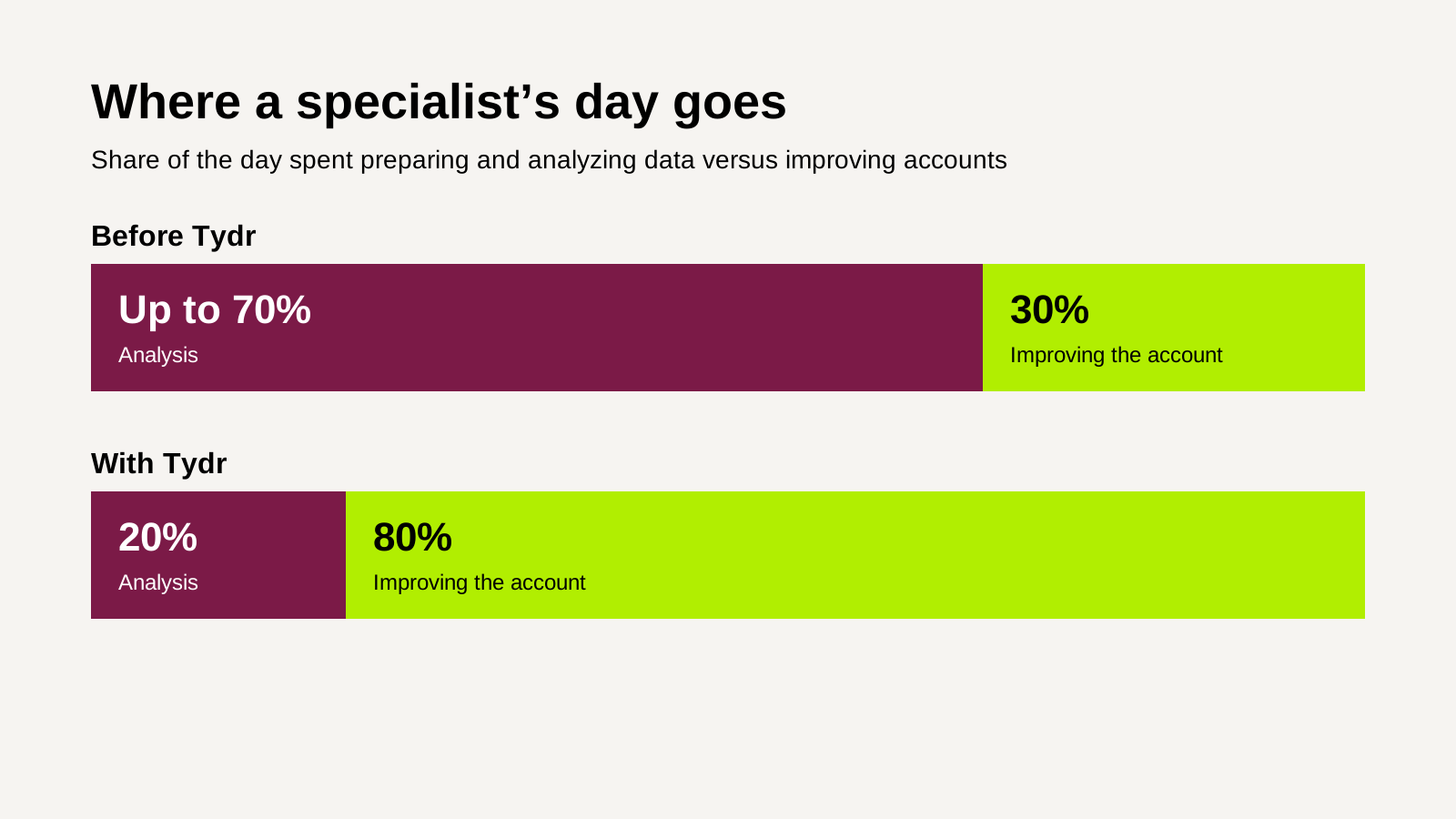
2. Specialists spent up to 70% of their day on analysis
Most of a specialist’s day went to working out what had happened in an account rather than making the changes that improve it. The work that creates results for the client got the least time.
Approach: an intelligence layer around a general model
We built an intelligence layer that connects Brist’s internal data, rules and expertise to a general-purpose model. When a specialist asks a question, Tydr pulls live numbers, checks Brist’s playbooks, verifies client budgets, applies guardrails and writes in Brist’s tone of voice, like a colleague who has worked there for years. The work started as a pilot and moved into Antire’s Value Center once the pilot showed results.
The layer has five elements.
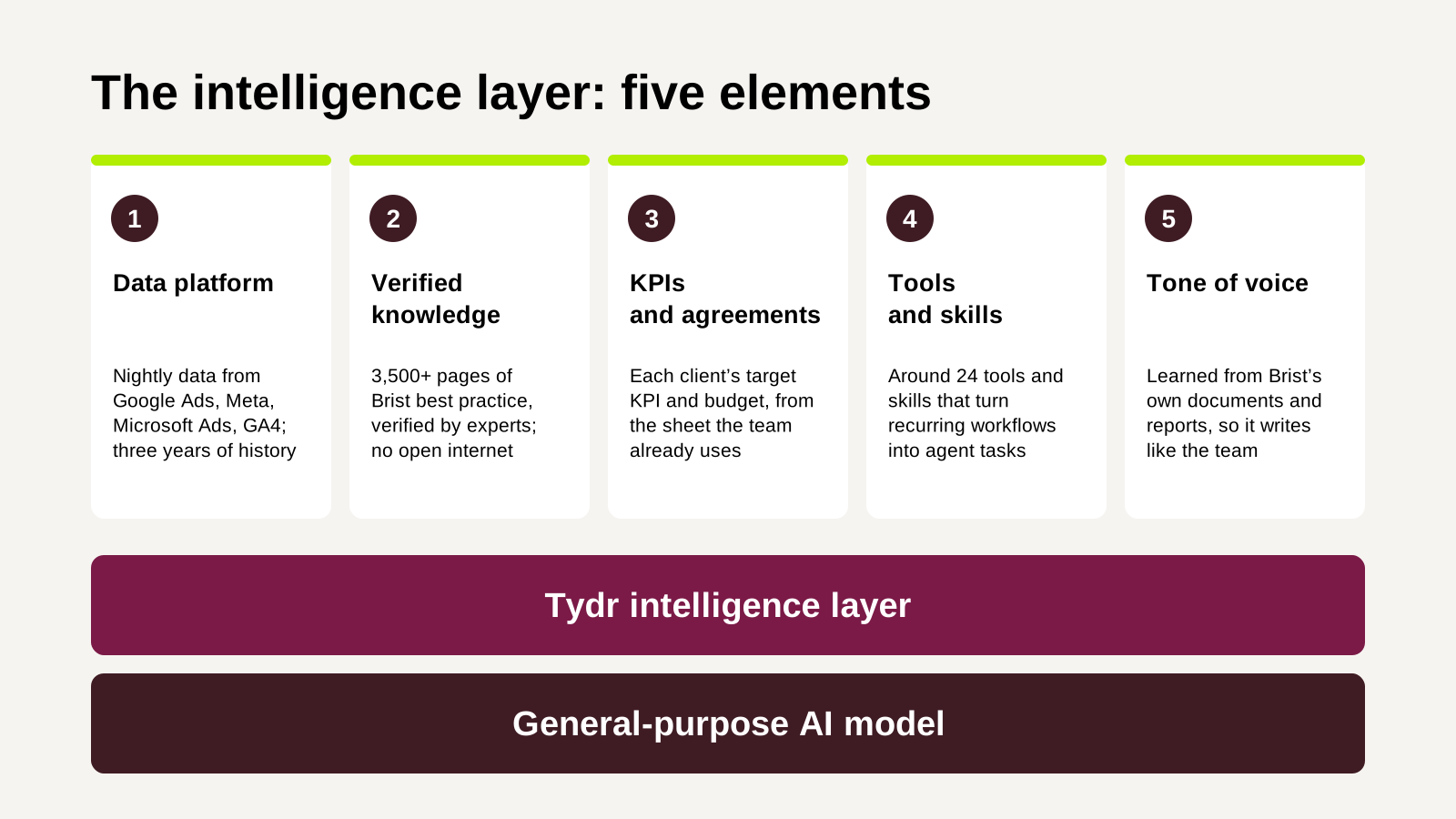
1. Data platform
Every night, Tydr collects each client’s numbers from Google Ads, Meta, Microsoft Ads and GA4 into one place, with three years of history.
2. Verified knowledge
More than 3,500 pages of Brist’s best practice, verified by its own experts. The agent answers from this knowledge base and never from the open internet.
3. KPIs and agreements
The agent knows each client’s target KPI and budget, read from the same sheet the team already uses.
4. Tools and skills
We built 24 AI tools and skills for Brist’s marketing operations. They are the repetitive workflows specialists run every week, turned into predefined skills the agent carries out without taking a specialist’s time.
5. Tone of voice
Tydr learned Brist’s language and writing style from the agency’s existing documents and reports, many written long before anyone used AI. It now writes analysis and client-ready text that reads like it came from a Brist employee. These contents are reviewed by specialists before it is discussed in the meetings with clients.
Results
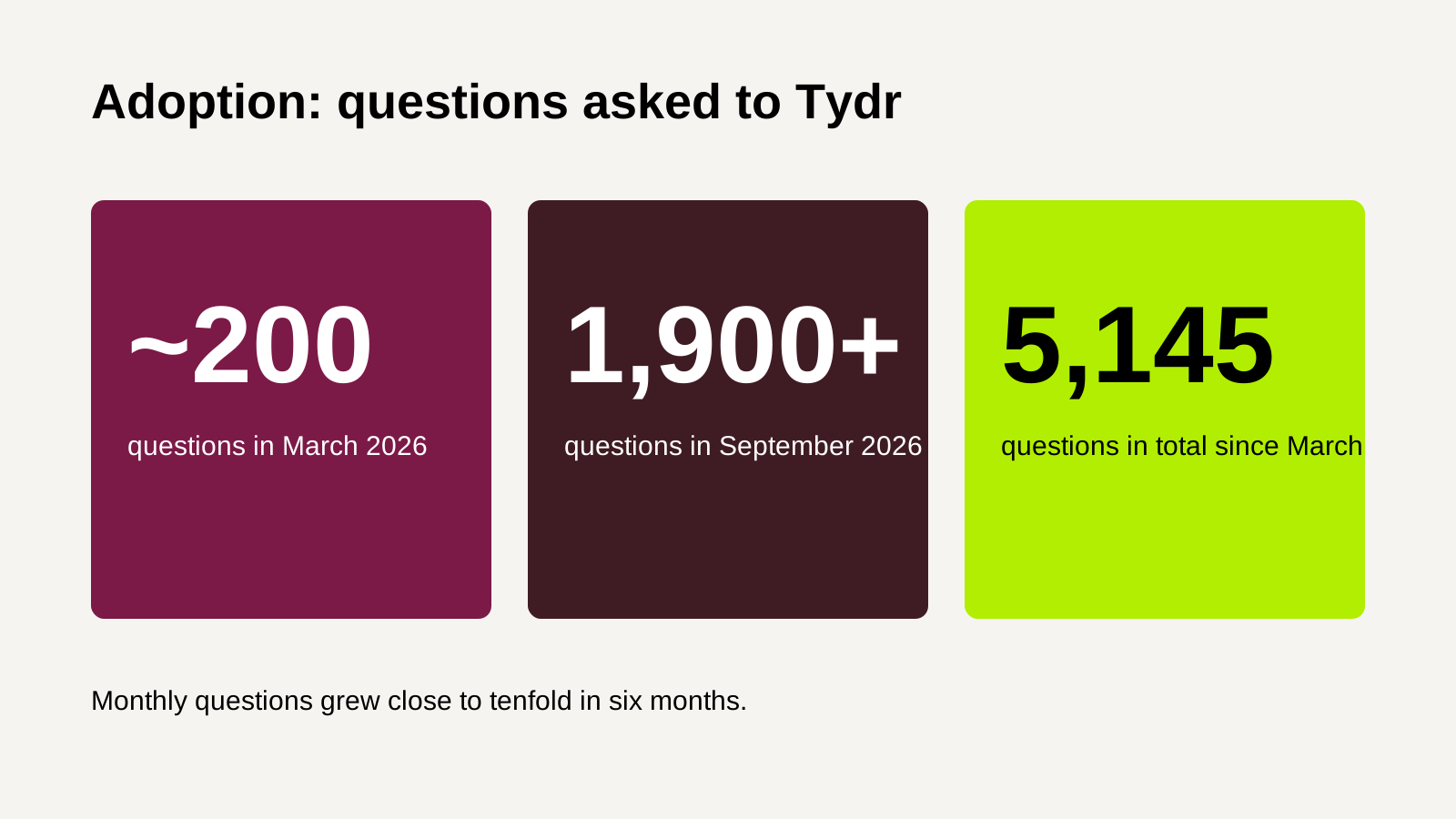
Adoption: from 200 to more than 1,900 questions a month
Tydr's pilot started in January 2026, with a few senior specialists. In march Brist opened it to the whole company. That month, specialists asked about 200 questions. By September the number had grown 1,900 a month.
Time on data preparation fell from up to 70% to 20%
Specialists now spend most of their day improving accounts instead of collecting and cleaning data. They get answers in seconds to questions that used to take hours:
- Plan the work: “I have two hours to optimize the account tomorrow. What should I do to maximize value for the client?”
- Find the winners: “Show me the 80/20 rule: which 20% of campaigns drive 80% of conversion value, and which keywords are the real winners?”
- Trace the changes: “What has changed in the account in the last 30 days, and by whom?”
One client got 30% more leads at 30% lower cost per lead
In one account, comparing January with the same month the year before, leads went up 30% and cost per lead went down 30%, while spend went down by 6%. 80% of the changes that month for that account came from the agent's recommendations.