Antire AI Survey 2026
AI in Norway: Are we really ahead?
Despite the attention AI gets in the board room, there's little documentation of measurable value.
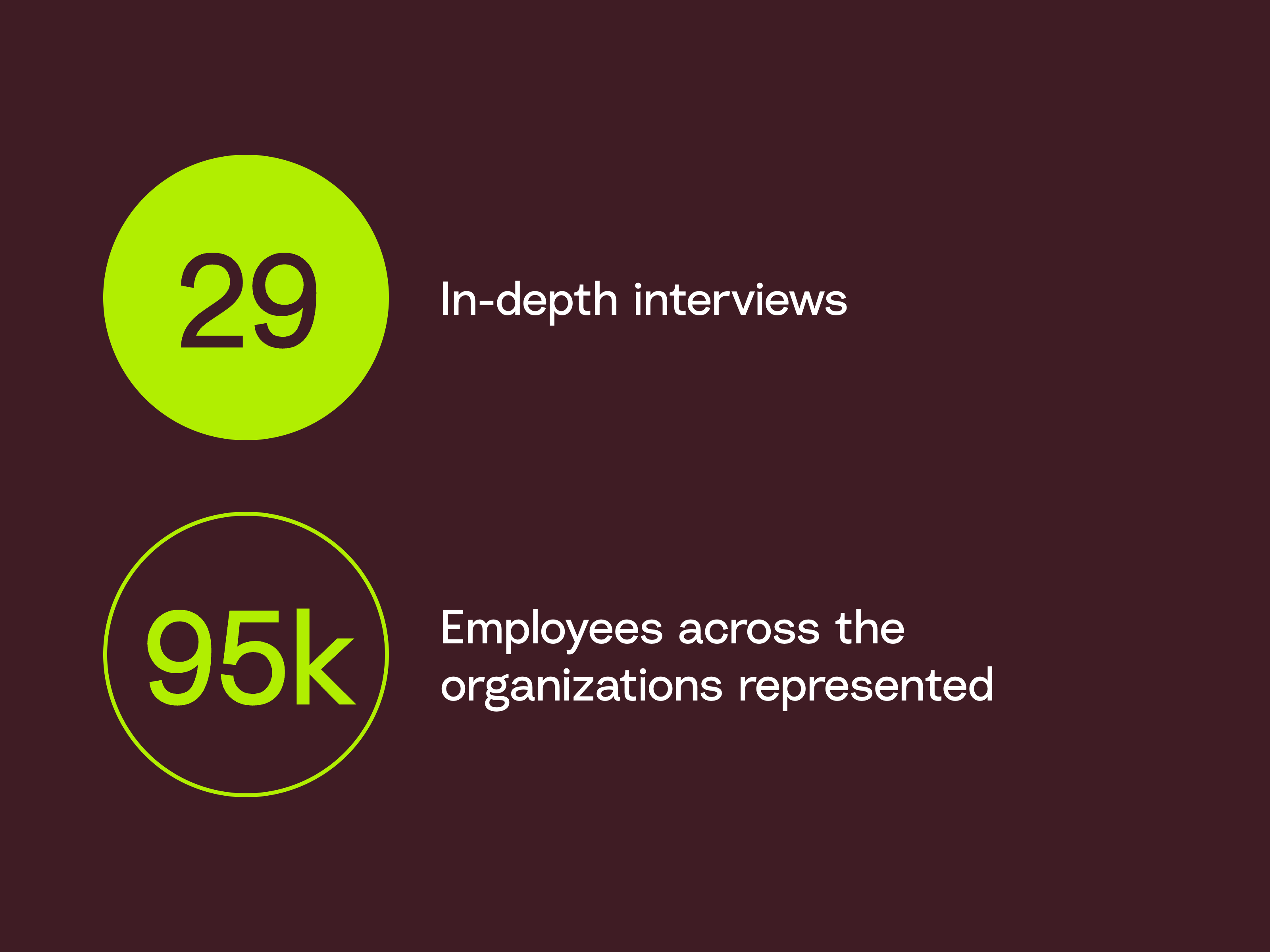
This report explores the state of AI in Norwegian companies through in depth interviews with 29 C-level leaders across organizations representing around 95 000 employees.
Strategy & positioning
Ambition is high but operational reality lags
While strategic important and ambitions for AI is high, reality is that most organizations are yet to implement it in their core operations.
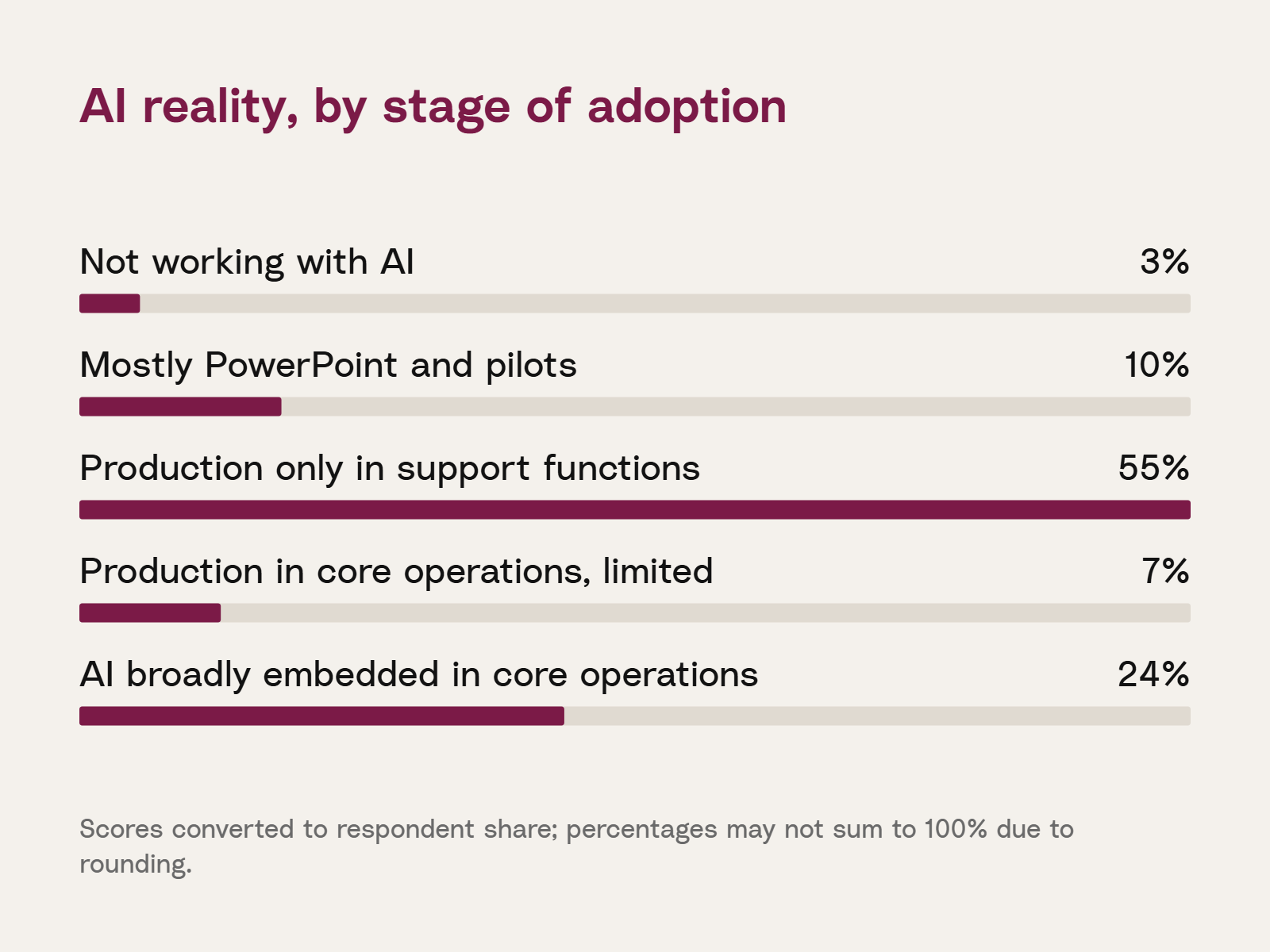
The majority of organizations have AI in production in support functions. However, only 31% report AI in their core operations, indicating that the blocker is no longer strategic attention, but the ability to execute.
The job now is less about building enthusiasm, and more about making AI a normal part of how work gets prioritized and managed.
The intersection between ambition and execution
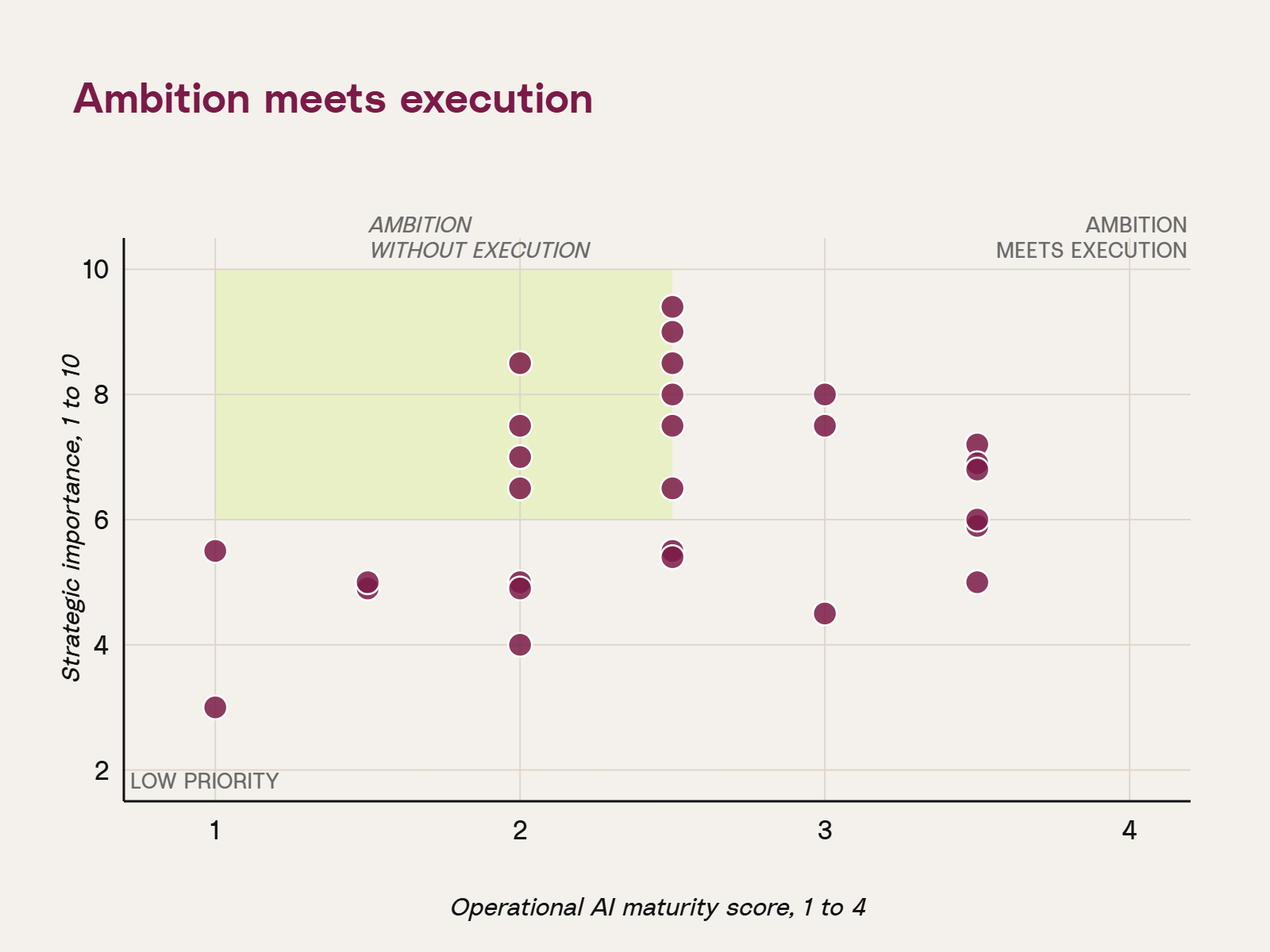
Leaders rate AI as strategically important, scoring it 6.5 out of 10 on average. Operational maturity tells a different story at 2.5 out of 4 as the average, with 20 of 29 organizations sitting at or below the midpoint and none reaching the top.
This leaves majority of organizations themselves in the upper left quadrant with high ambition that is not yet met in execution, a pattern that is likely explained by the recent entry and fast development of AI.
Adoption & Value
Adoption is high when errors are cheap
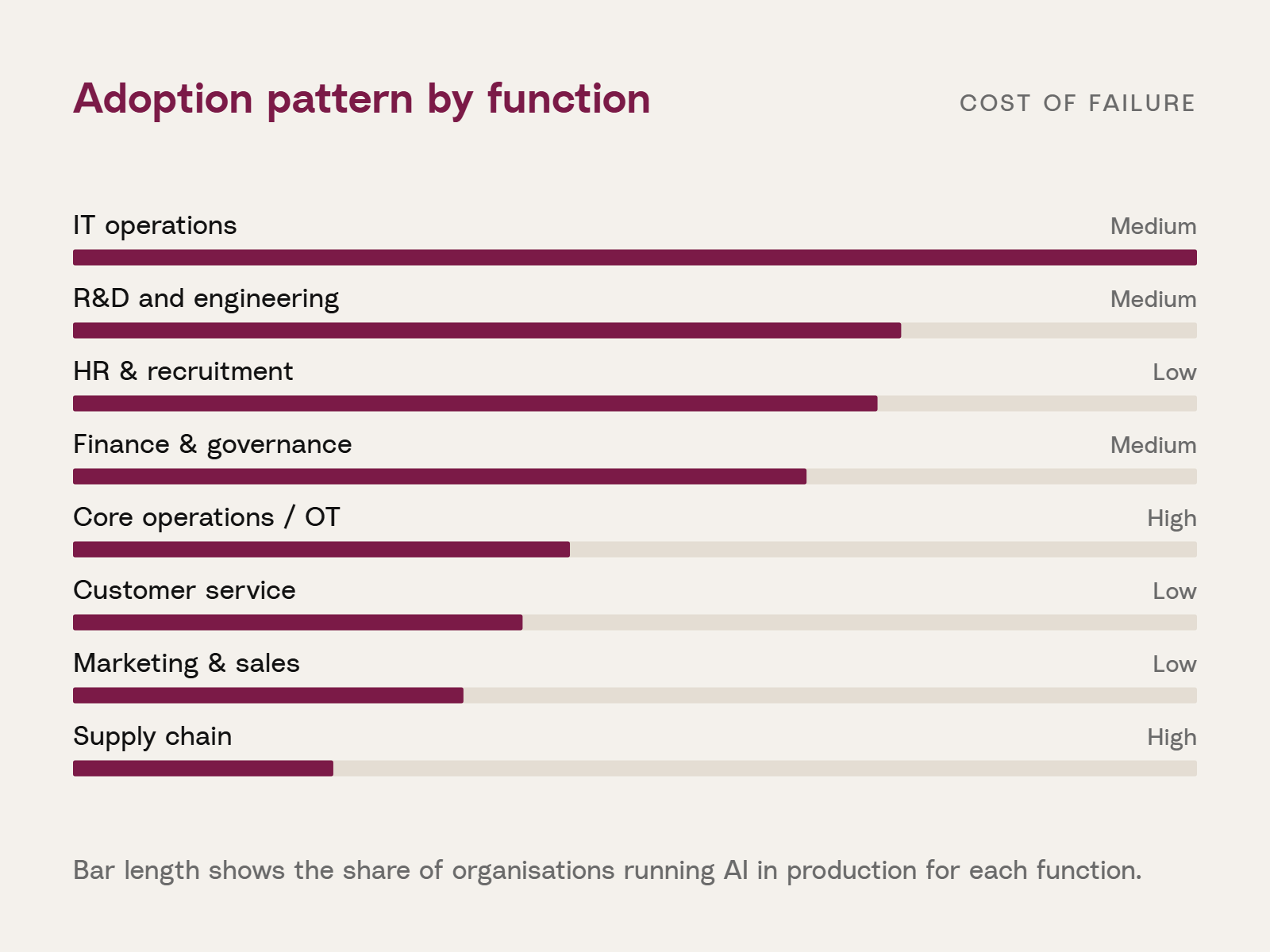
Naturally, when errors are less costly and easily recoverable, adoption is faster and higher. When errors are hard to reverse or decisions are safety critical and operationally complex, there is lower adoption, as seen for supply chain and core operations.
Another aspect influencing the adoption is the usability of data. If there is a lack of structure to the data, AI adoption is difficult as this is one of the core requirements for the technology to be able to give useful output. Within marketing, sales, and customer service this is what often holds adoption back although the cost of failure is low.
Low investment limits value gain
While many claim the strategic importance of AI, the investments are telling a different story, leading to value gains that are yet to materialize on an enterprise level.
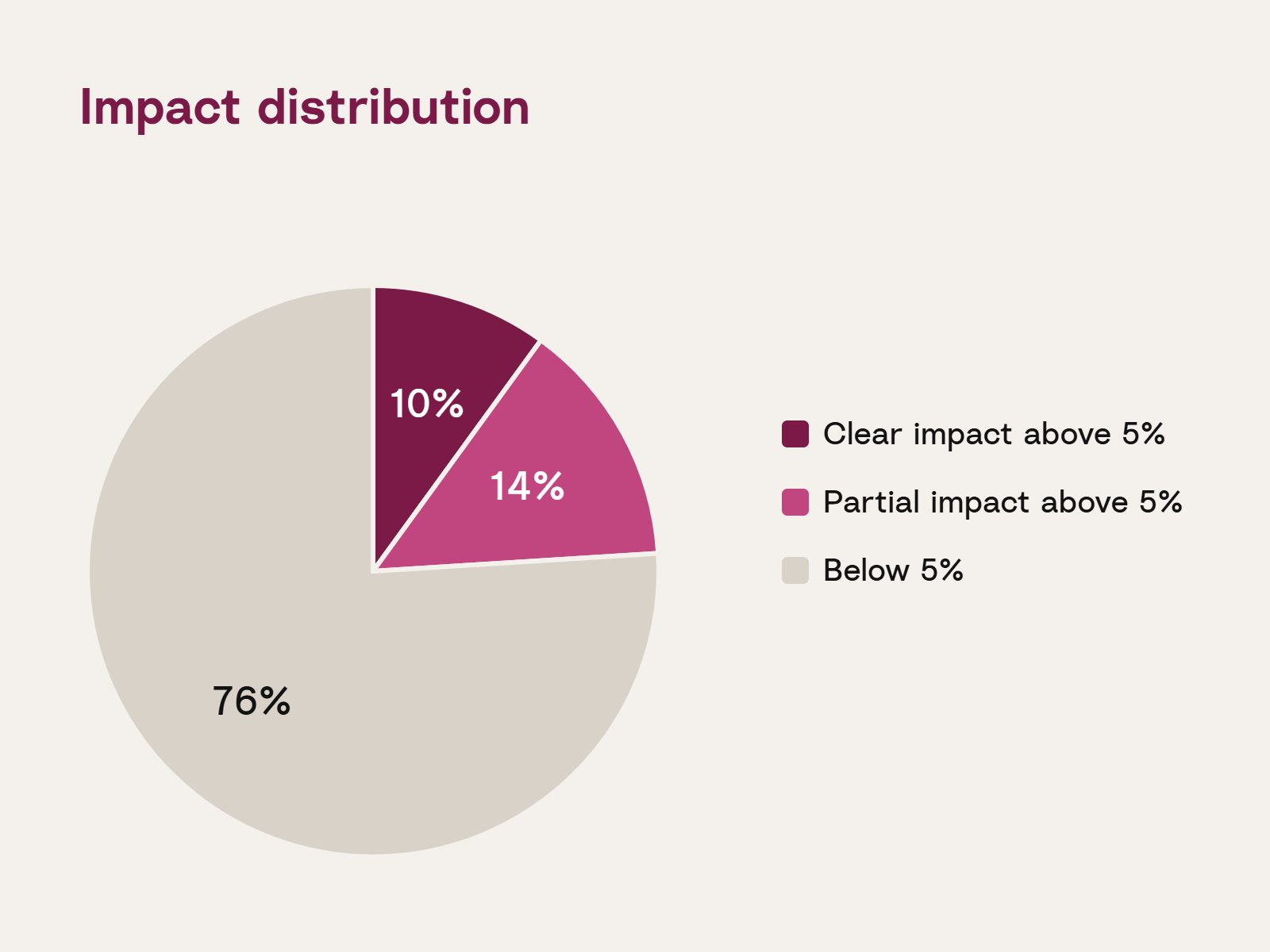
With IT spend being on average 15% of the organizations total budget, and AI comprising only 12% of the IT budget, the implied share of total budget spent on AI is only 1.8% of the total budget. Consequentially, 24% of respondents report a clear or partial impact above 5% but none report impact above 20%.
To scale AI in the more difficult, but high impact operations, investments are required beyond licensing. Data, platforms, governance, and integrations are all prerequisites to successful AI implementation, and they require investments.
Top performers
Named ownership is the clearest separator
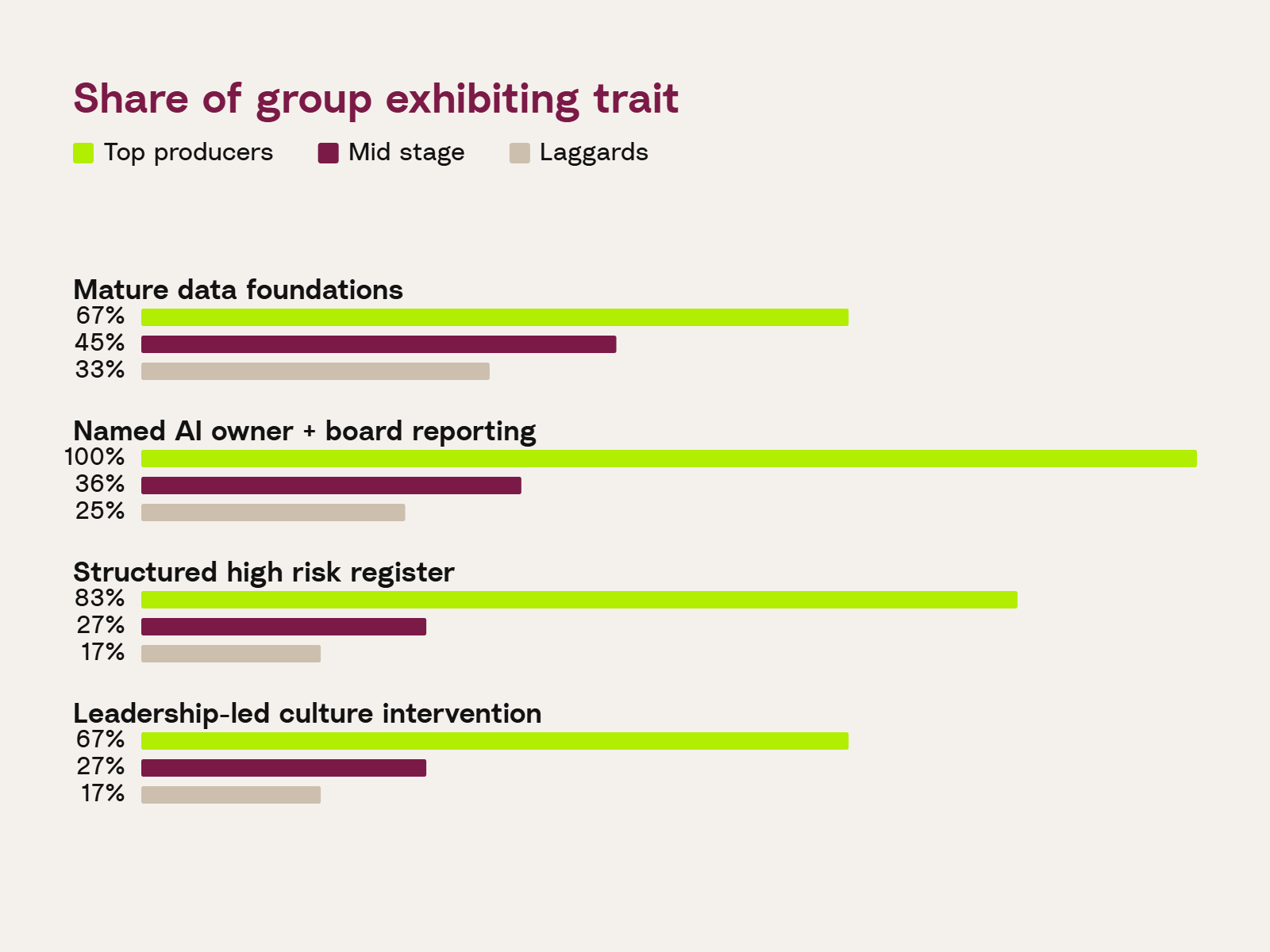
Among the top performers, those gaining most value from AI today, one thing is clear; they have named AI ownership internally and report to the board on the topic. All this is supported by having structured high risk registers and leadership led culture intervention.
Other similarities include mature data foundations, but is less clearly distinct between those who succeed and those who do not.
While named ownership is the entry ticket, sustained success and production depends on leadership, governance, and data foundations.
Data & technology
Data foundations are still constraining scale
While the data foundations are good enough to support pilots, they are not yet strong enough to support broad scaling.
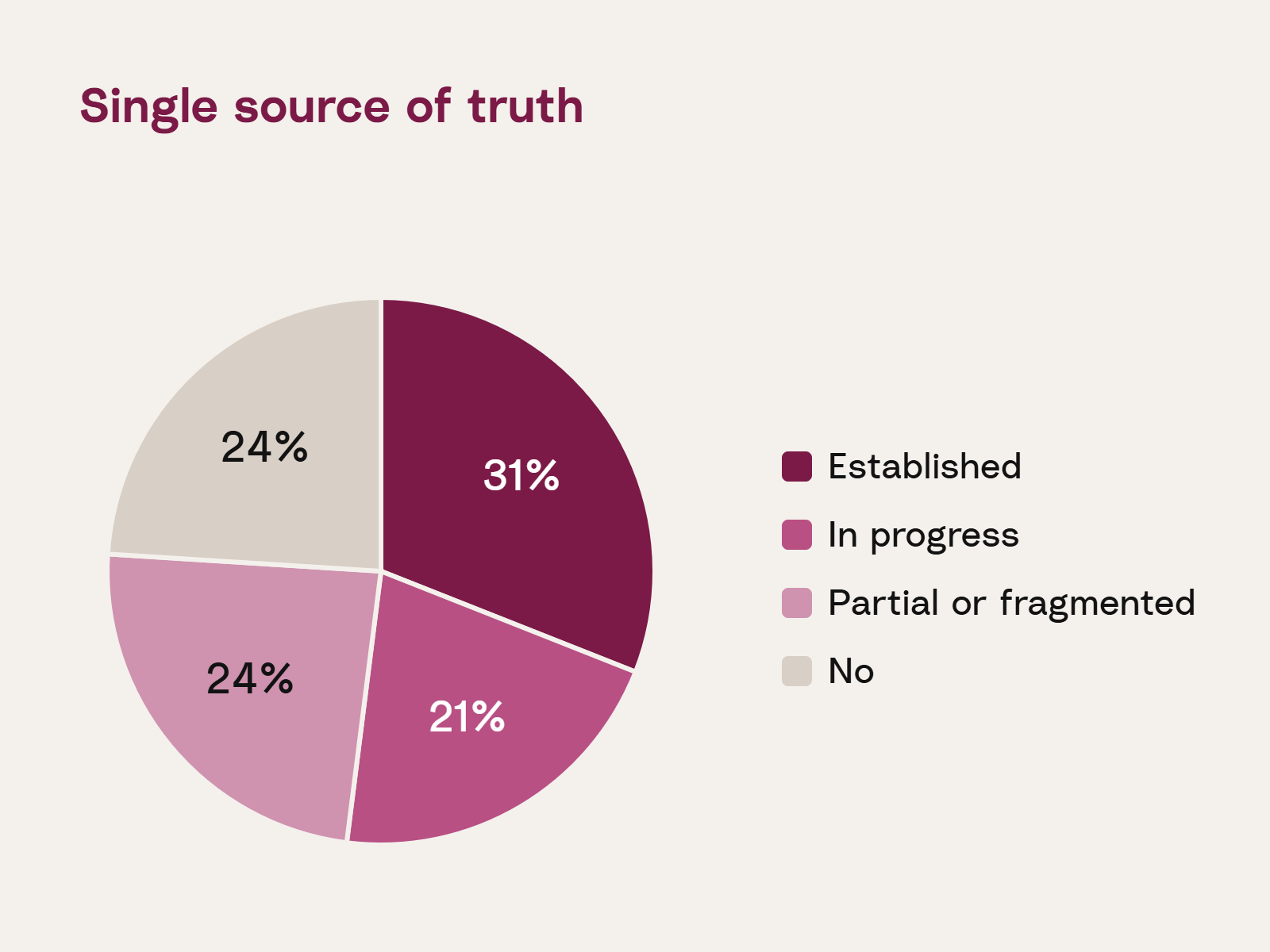
Only 31% of respondents have an established single source of truth. Data quality, availability, ownership, and integration are the most cited blockers to getting a good data foundation in place to build AI upon.
Given the current data maturity level, it is not surprising to see AI mainly in pilots and supporting functions with limited adoption in core operations.
Physical AI is selective but emerging
AI does not only exist in software or digital environments, but can also interact with the physical world through robots, often in industrial settings.
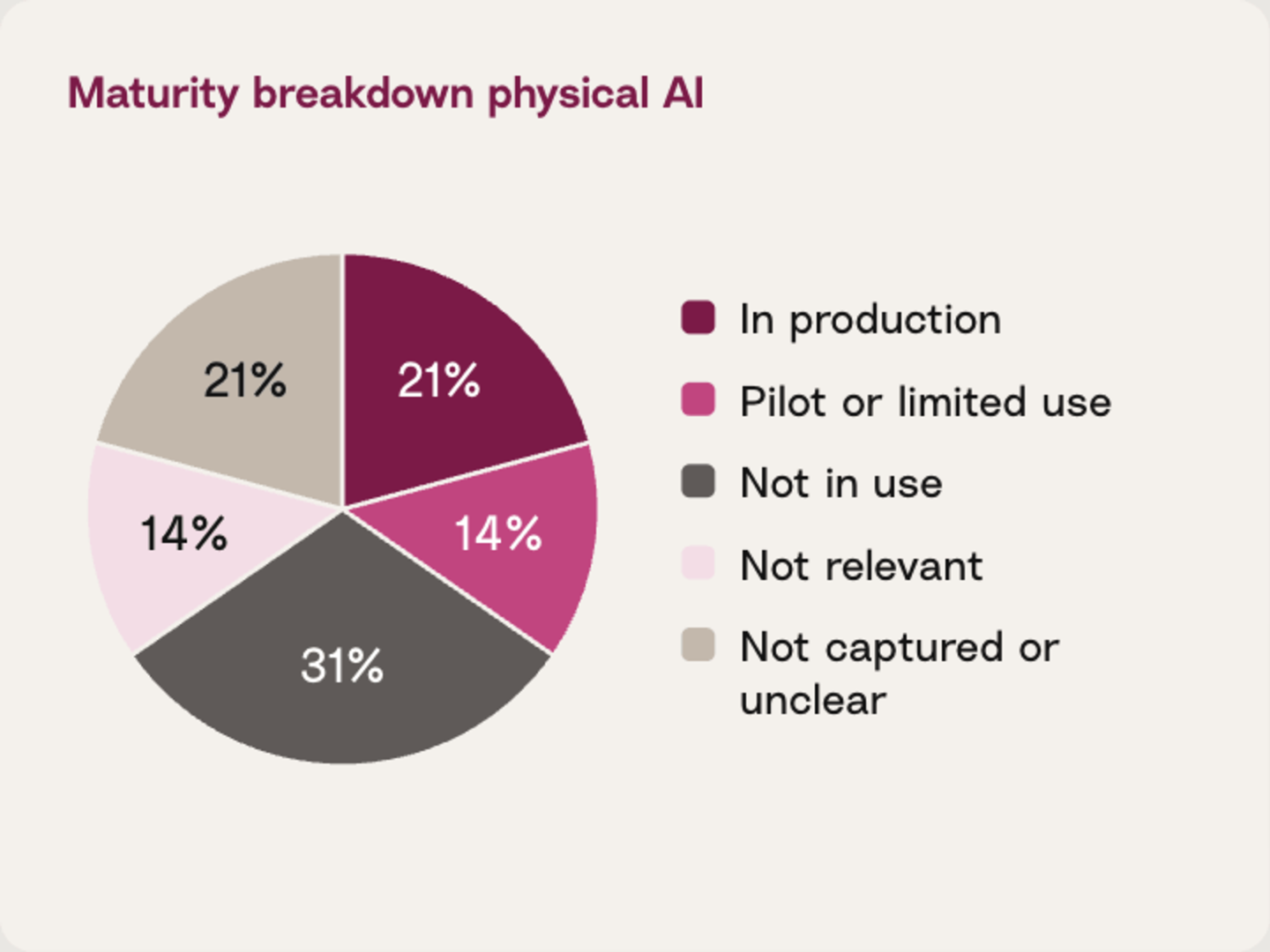
21% of the sampled organizations have production level AI applied in physical operations, and another 14% have limited use or pilots in place. This indicates an emerging, but not yet widespread use. The relevance is also industry dependent which may explain some of the numbers.
Adoption of physical AI appears where organizations have readily available operational data, connected assets, automation maturity, and clear human review points. It does not start with the robot, but with the data, workflows, and decisions.
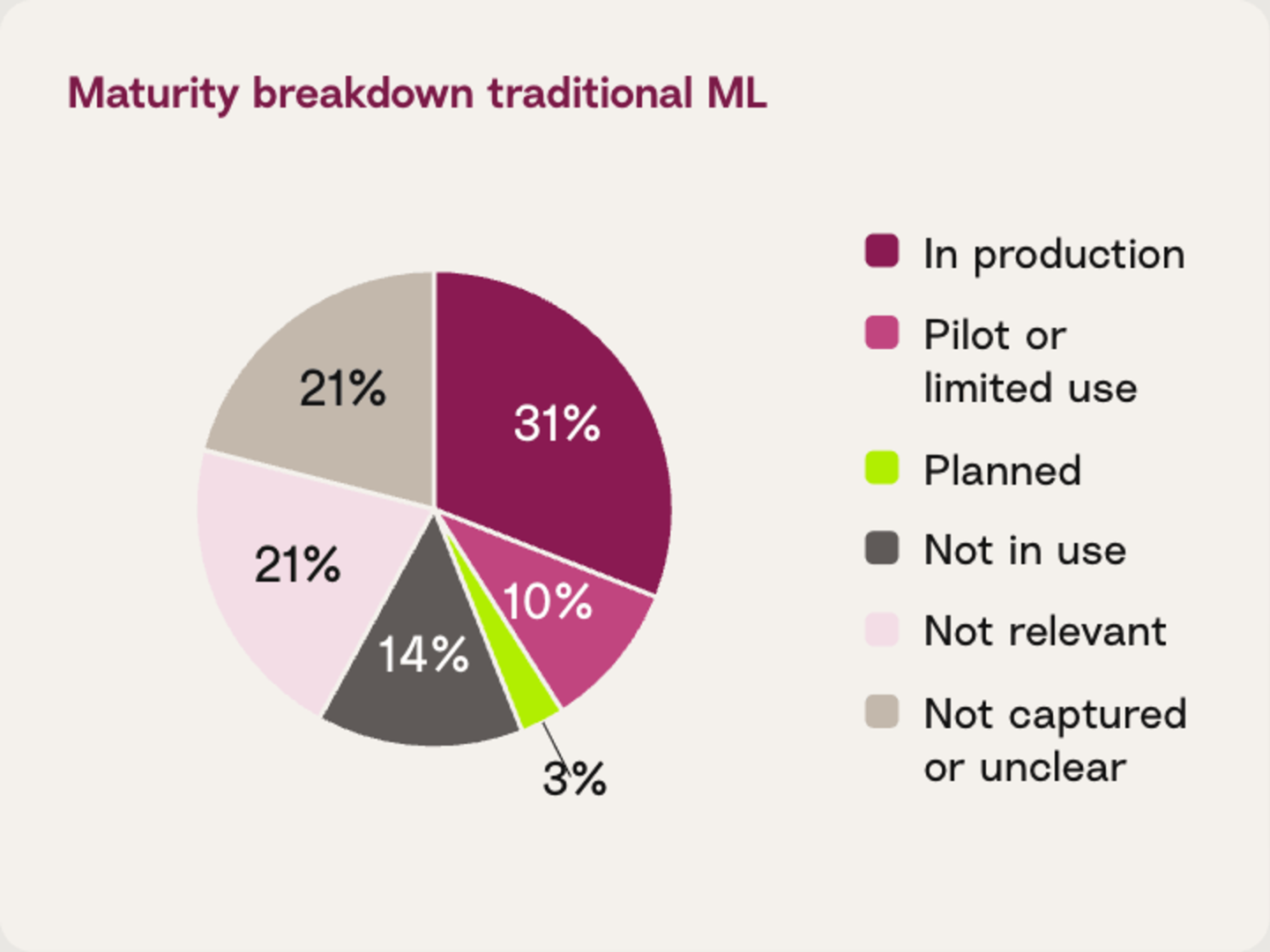
Machine learning is already in production
Machine learning (ML) works to teach a machine to do a task autonomously and to improve over time based on experience. ML has existed for a much longer time than the LLMs we know today, explaining the maturity in the field.
Where forecasting drives decisions, 31% of participants report machine learning in production. Another 10% report limited use or pilots in place. This covers areas such as pricing and revenue optimization, inventory planning, trading and energy optimization, as well as routing and operational planning.
While most organizations can implement LLM's into their work, ML is not as easily implemented and typically requires external expertise within the area. If it was easier, the adoption rate for production would likely be higher than 31% given the value it creates.
Organization & governance
Rules are common but policies are rare
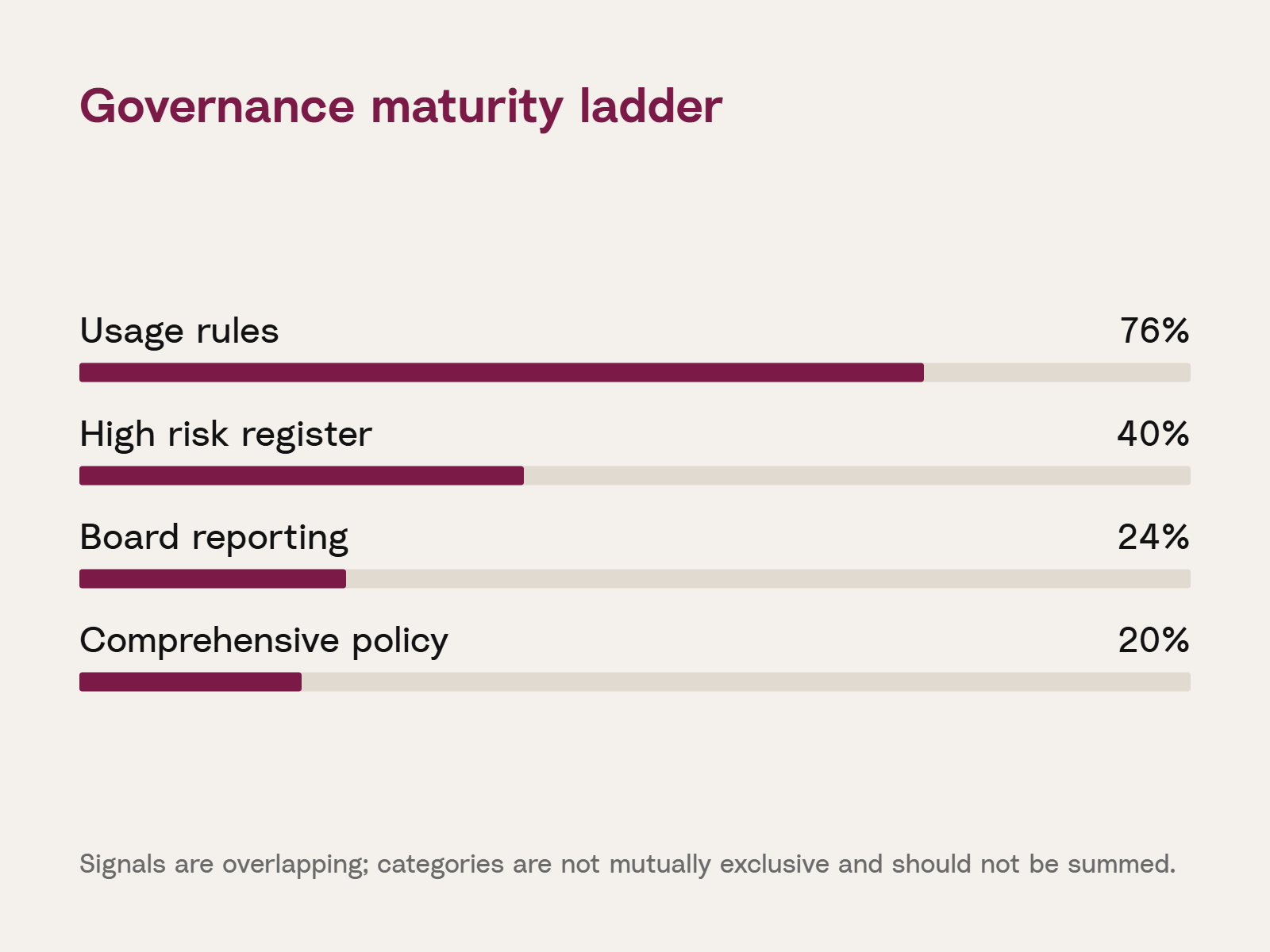
While ownership exists in practice, formal governance, board reporting, and risk routines are still catching up.
Out of the participating organizations, 76% report some form of GenAI usage rules. However, only 20% claim to have a comprehensive AI policy, indicating many organizations are falling behind on the very things that make the top performers stand out.
To succeed with scaling and gain the measurable value of AI, formalized ownership and governance are the first building blocks.
Organization & governance
Emerging but uneven EU AI Act readiness
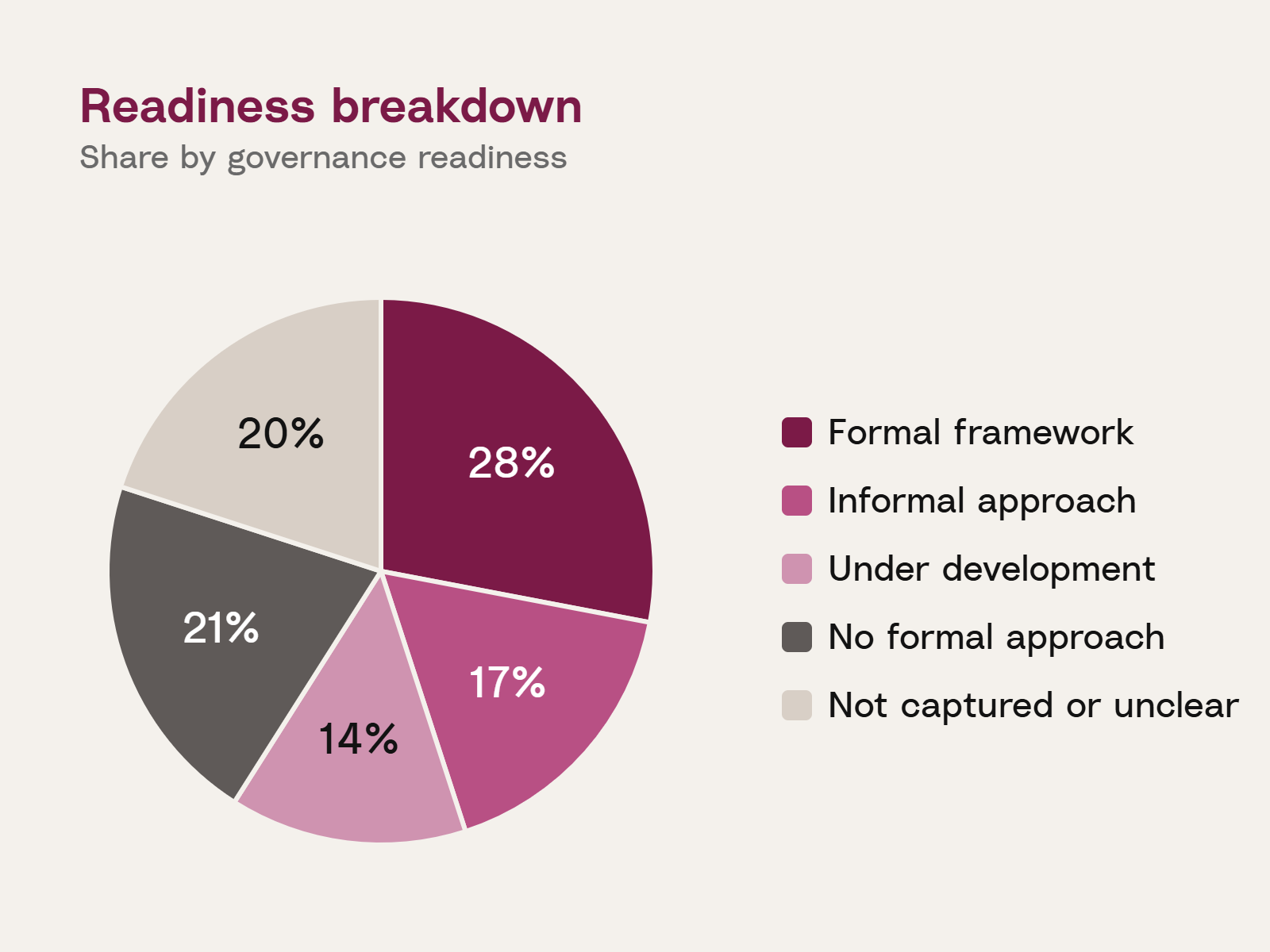
Similarly to internal governance figures, when it comes to external reporting, maturity is still rather low. The EU AI Act forces organizations to know which use cases are high risk, who owns them, how vendors are assessed, and how decisions are documented.
Only 28% of respondents describe a formal AI governance framework, while 17% have an informal approach and 14% describe their framework as under development.
While the full scope of the EU AI Act is not enforced until 2027, organizations should be considering and preparing for it already. Doing so will likely also support internal governance.
What holds adoption back
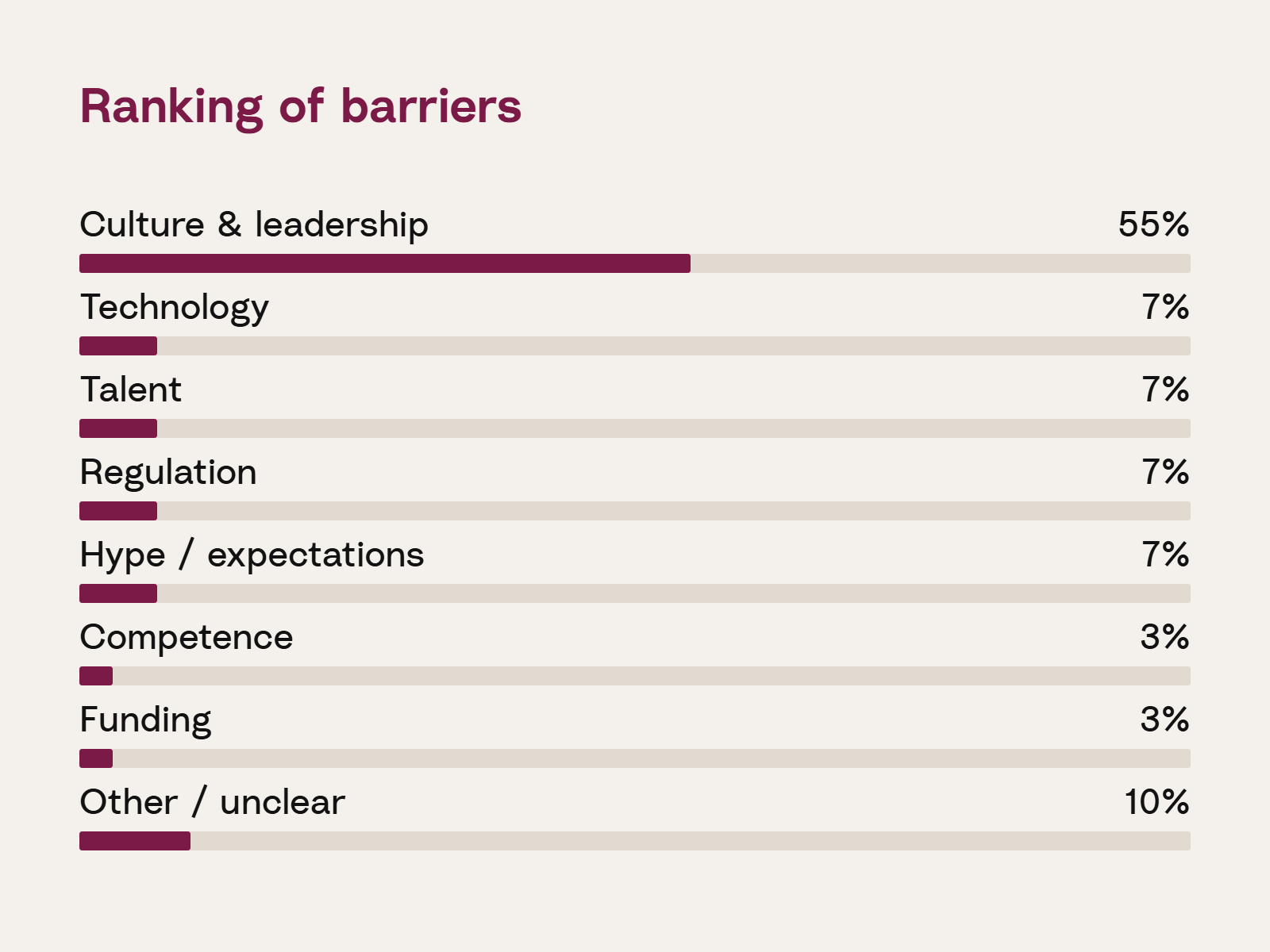
Culture and leadership are the largest barrier
No other aspects is near as commonly mentioned when asked what is holding AI adoption back. Only 7% mention technology or talent respectively, while 55% lift culture and leadership as the biggest blocker.
Change management takes time and requires dedication, and cultural shifts take even longer. When new technologies emerge and become widely available, it is not surprising that leadership and culture is not keeping up.
In order to succeed with AI strategy, it is important to emphasize the culture and leadership aspects to ensure routines and behaviors change at speed.
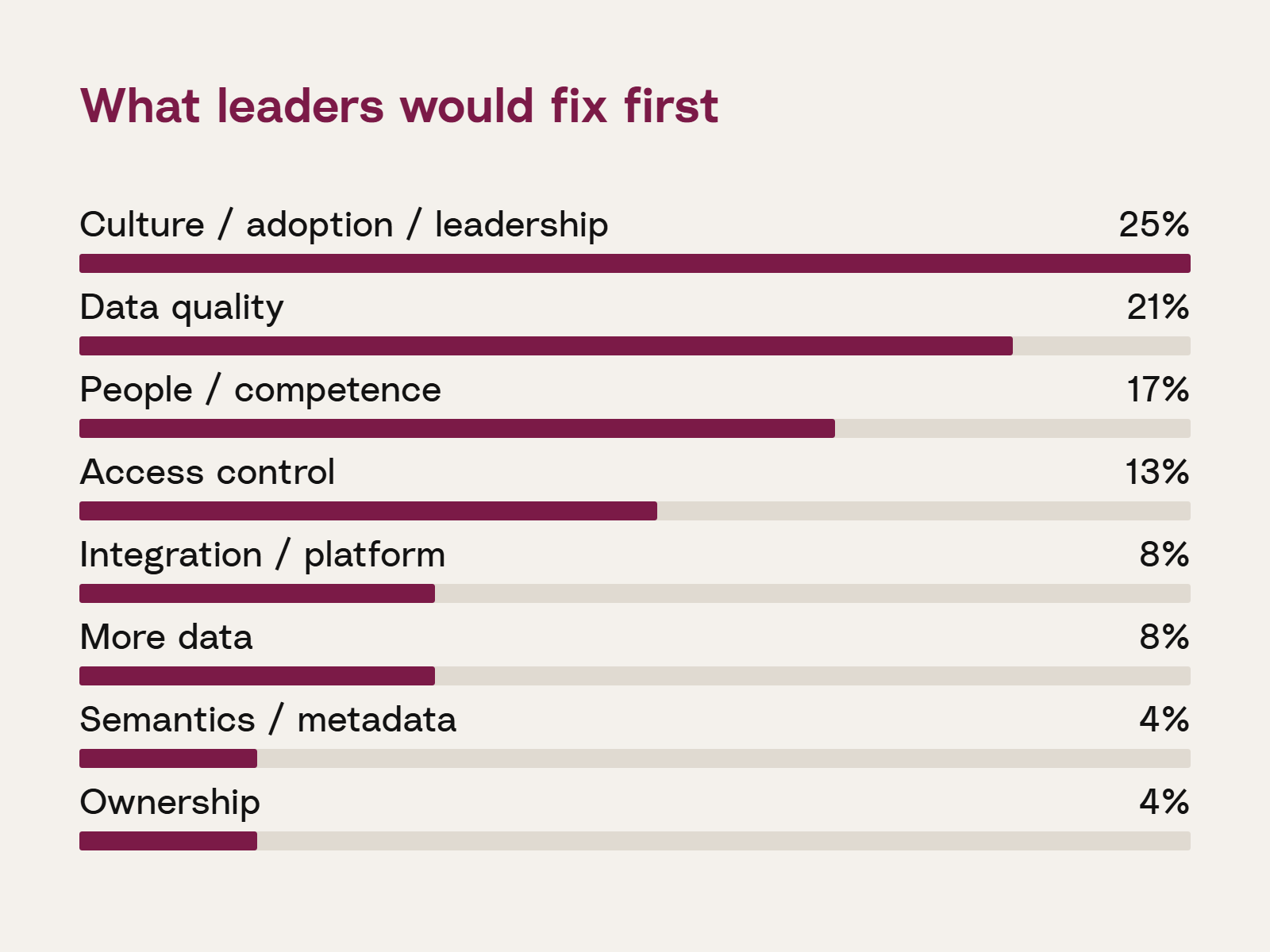
The magic fix is practical but not contradictory
While culture is named as the biggest barrier, leaders are less unanimous when it comes to what they would prioritize if they could magically fix one thing to accelerate adoption. Culture and leadership is still the most commonly mentioned at 25% and people or competence at 17%. However, 54% point to data, access, or integration conditions.
All this indicates that while the biggest blocker might be in leadership at the moment, a tougher challenge to overcome might lie on the technical side for at least some. True expertise on how to set up an AI ready data foundation is difficult to come by, and magically fixing this hurdle then takes precedence over the culture and leadership.
%20(1).png?width=800&height=800&name=ARCH%20Hub%20speakers%20round%20image%20(for%20email)%20(1).png)